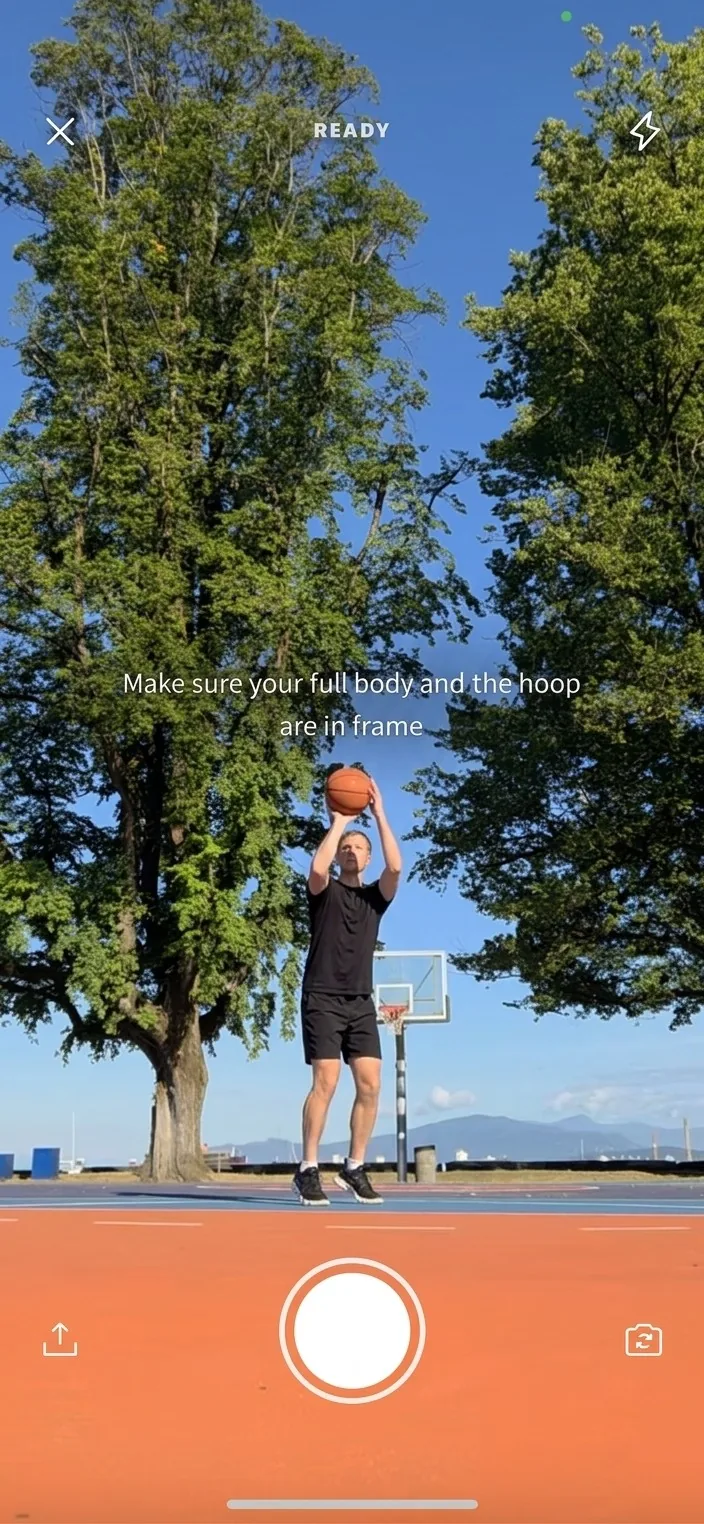
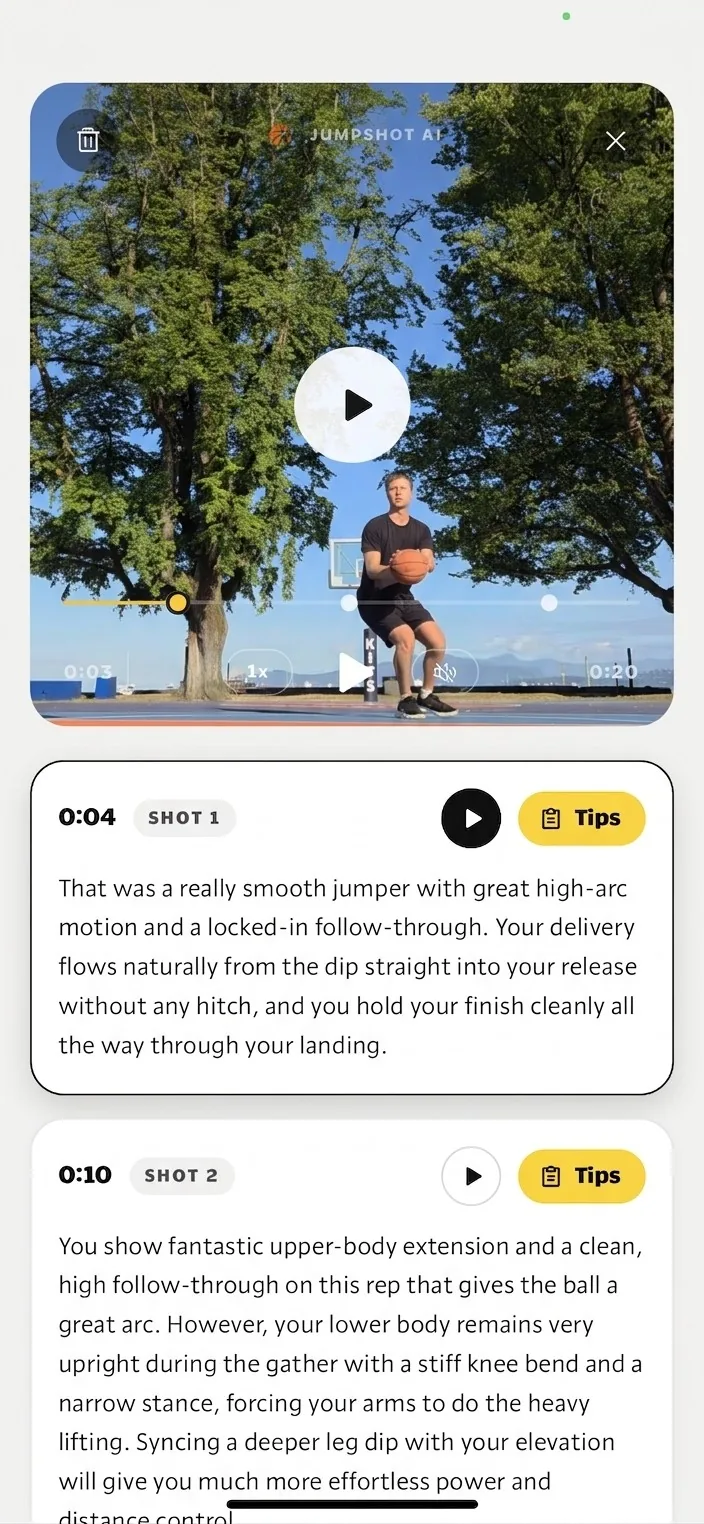
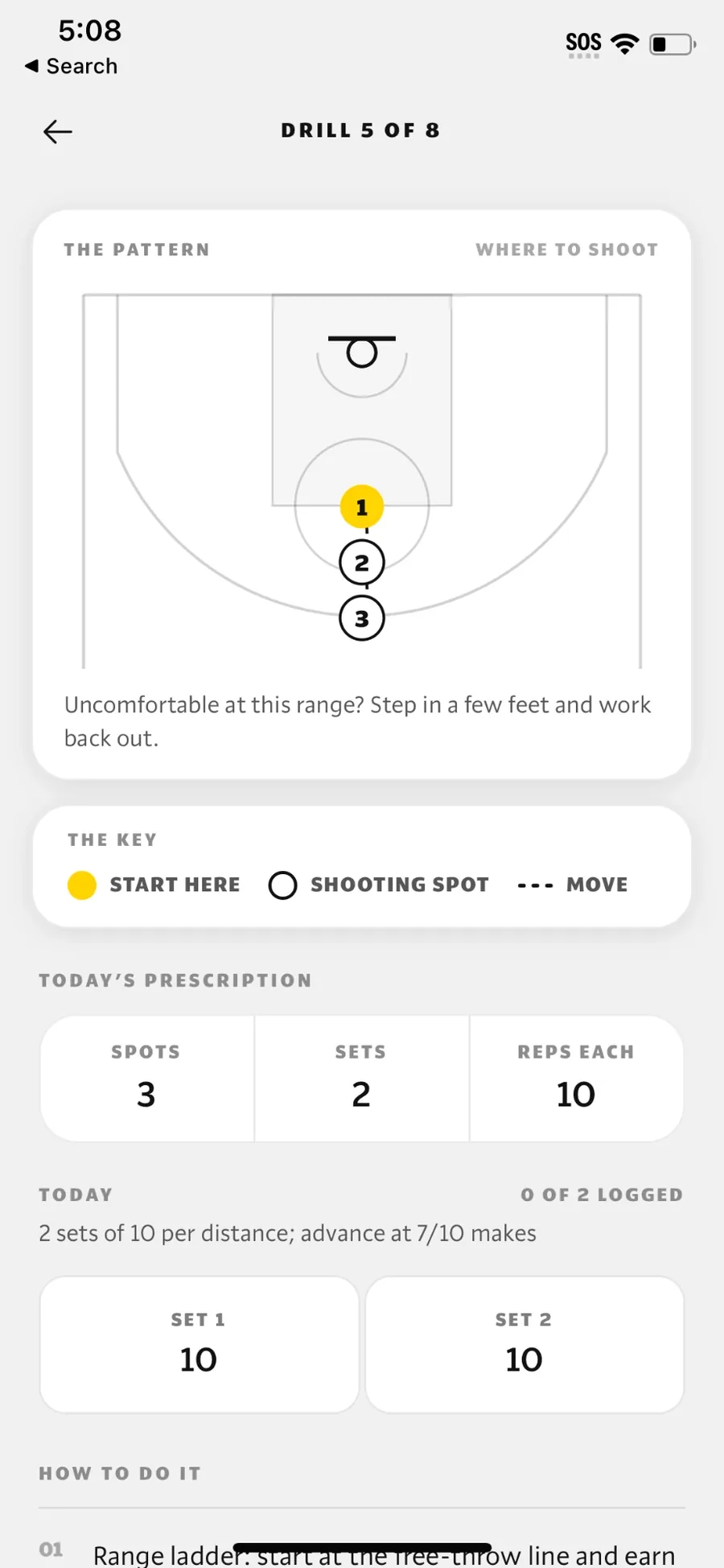
Record 30 seconds of shooting. The AI reads every frame of every rep, scores your mechanics out of 10, and hands back a report that names the exact fault costing you makes.
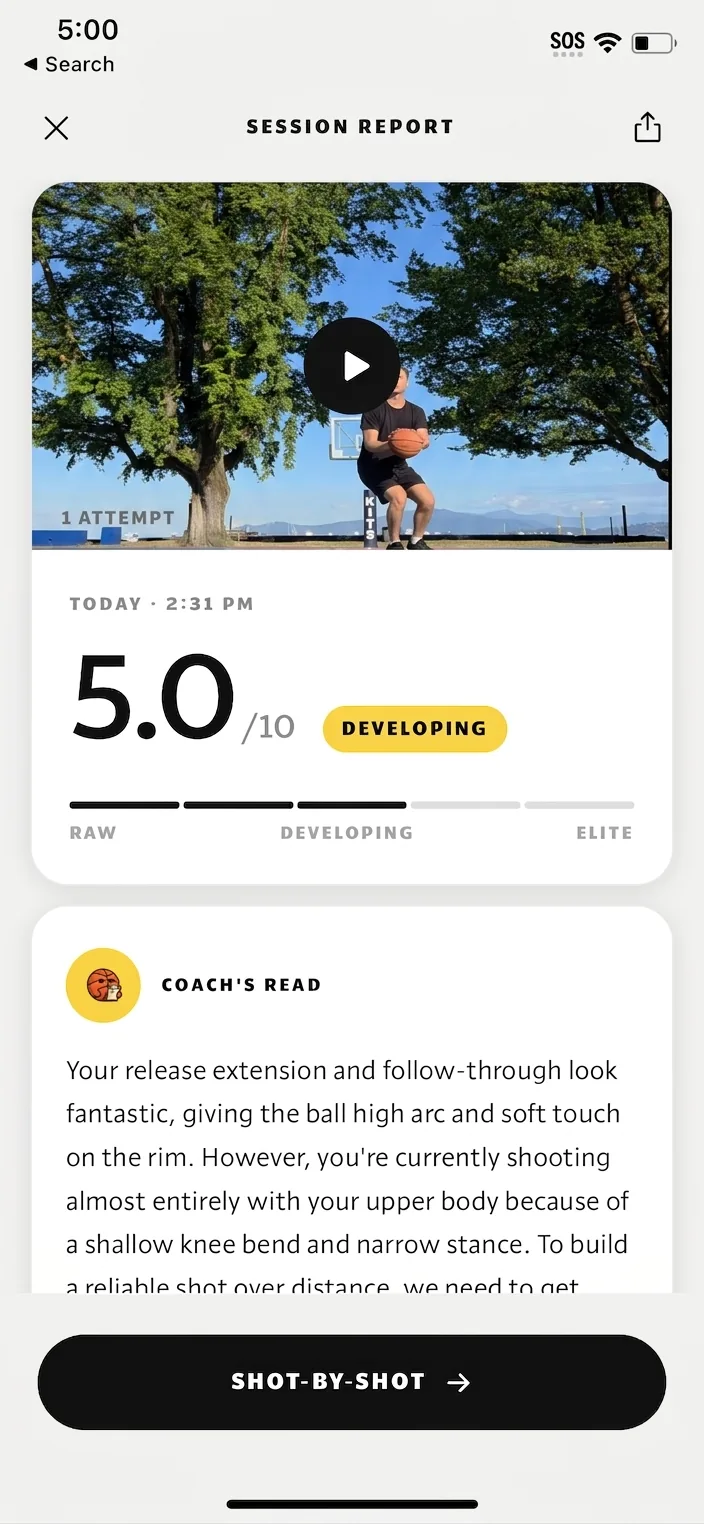
No dashboards full of numbers you cannot use. Watch a clip go in and a plain-English breakdown of stance, elbow, release and follow-through come back out.
How AI shot analysis stacks up against the two things players normally rely on to fix their form.
"I tried a couple of AI basketball training apps already but never really liked the feedback they gave — this one actually provided a detailed analysis that could help someone."
"I've been trying to fix my release for months watching YouTube. 5 minutes with this app and it told me exactly what was wrong — my guide hand was pushing the ball."
Marcus T. · Rec League Player "As a coach, I use this with my players between sessions. They get feedback even when I'm not there. It's like giving them homework that actually helps."
Coach Davis · AAU Coach "My dad can't afford a shooting coach for me. This app gives me the same type of feedback. My percentage went from 32% to 41% in two months."
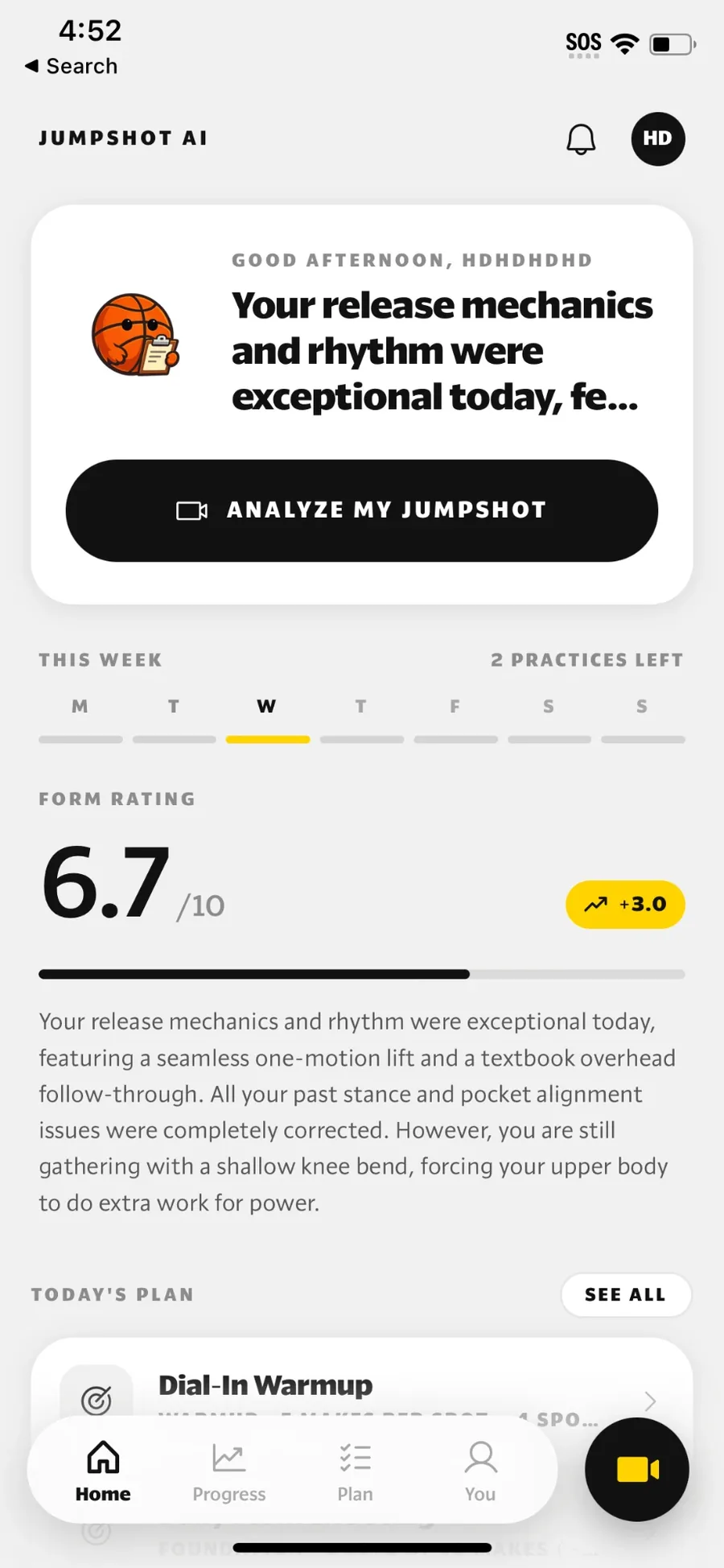
Jordan K. · 8th Grade Player Every session returns a form rating, a shot count, the mechanics reviewed, and a written coach’s report you can act on the same night.
What the analysis measures, how long it takes, and how much of it you can trust.
AI basketball shot analysis is the process of using computer vision to examine a video of your jump shot frame-by-frame, measure your shooting mechanics against known fundamentals, and return specific, prioritized corrections rather than general advice.
Jumpshot AI looks at your base and dip, how you generate power from your legs, your elbow alignment, your release point and timing, and your follow-through — the same checkpoints a shooting coach works through in a session.
Under a minute for a typical 30-second clip. You record, upload, and the shot-by-shot breakdown is waiting by the time you have picked the ball back up.
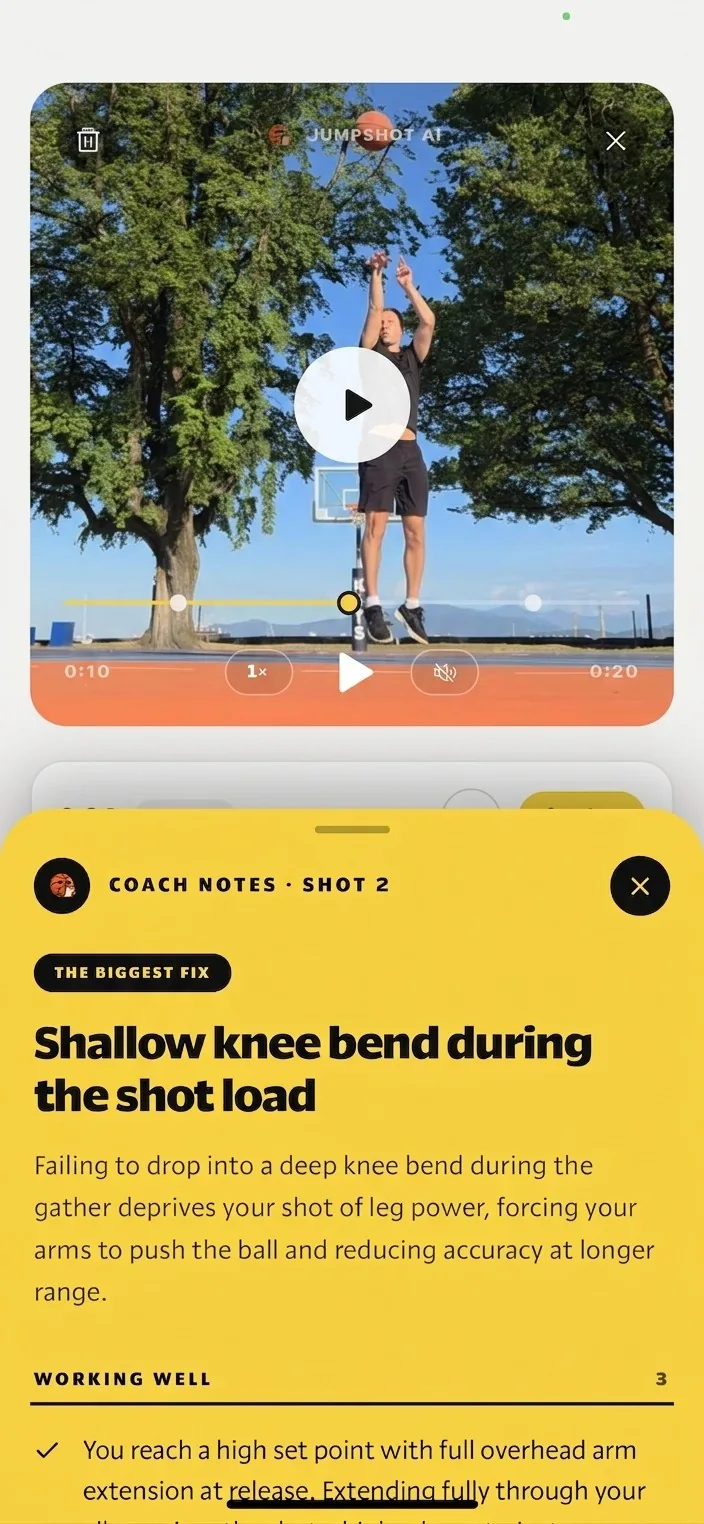
Every shot it detects in the clip is scored individually, then rolled into a session rating. That matters, because consistency across reps — not a single clean rep — is what actually shows up in a game.
Yes. The analysis is about mechanics, not outcomes. A make with bad form still gets flagged, and a miss with good form is still recognized as good form — which is exactly the feedback a box score can never give you.
It is not a replacement for a great in-person coach, but it catches the same mechanical faults, it is available every time you train, and it costs a fraction of an hourly rate. Many players use it between paid sessions to make the coaching they do pay for go further.
Shooting happens faster than you can perceive it. From dip to release, a jump shot takes somewhere between half a second and a second, which means the moment where your elbow drifts, your guide hand interferes, or your base opens up is over before you have registered it. You feel the result — the ball came out flat, it drifted left — but you cannot see the cause. This is the fundamental problem with self-coaching, and it is exactly what AI basketball shot analysis — and any good basketball shot analyzer — is built to solve.
Jumpshot AI decomposes your clip into individual frames and evaluates each rep against pro-level shooting fundamentals. It checks how you load and generate force through your legs, whether your shooting elbow stays under the ball, where in your jump the release happens, whether your guide hand is pushing rather than steadying, and whether your follow-through holds long enough to give the ball consistent backspin. Each of those checkpoints is scored, and each score is attached to a specific rep, so you can see whether a fault is chronic or whether it only shows up when you are tired.
The output is deliberately written in coaching language, not statistics. Rather than presenting an elbow angle in degrees and leaving you to interpret it, the analysis tells you what the number means for your shot and what to do about it — for example, that your guide hand is adding sideways force at release, which is why your misses trend left, and which drill isolates that. Then it ranks the faults, because a shooter who tries to fix five things at once fixes none of them. If all you want is the headline number, you can simply ask it to rate my jumpshot and start from the score.
Over time the value shifts from single reports to the trend. Because every session is scored the same way, your form rating becomes a genuine measure of whether your practice is working. If you spent three weeks drilling your release and the rating has not moved, that is real information — either the drill is wrong or you are not transferring it under fatigue. That feedback loop, applied consistently, is the difference between practicing and improving — and it is the whole premise of AI basketball training.
Download Jumpshot AI, film one clip, and read your shot back frame-by-frame.
Free to download • Available on iPhone and Android • Start improving today