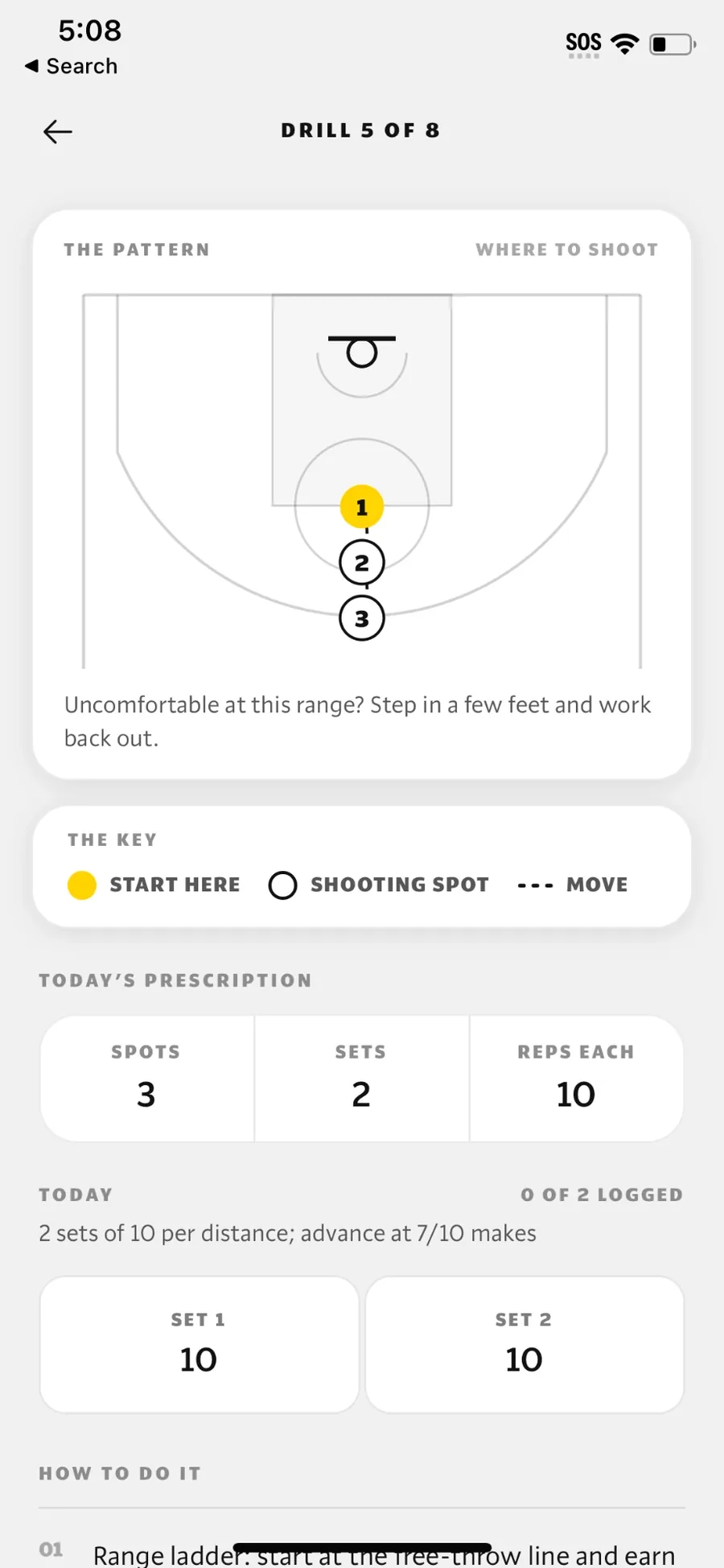
Counting makes tells you what happened. Tracking form tells you why. Jumpshot AI records every session, scores your mechanics, and charts whether your shot is genuinely improving.
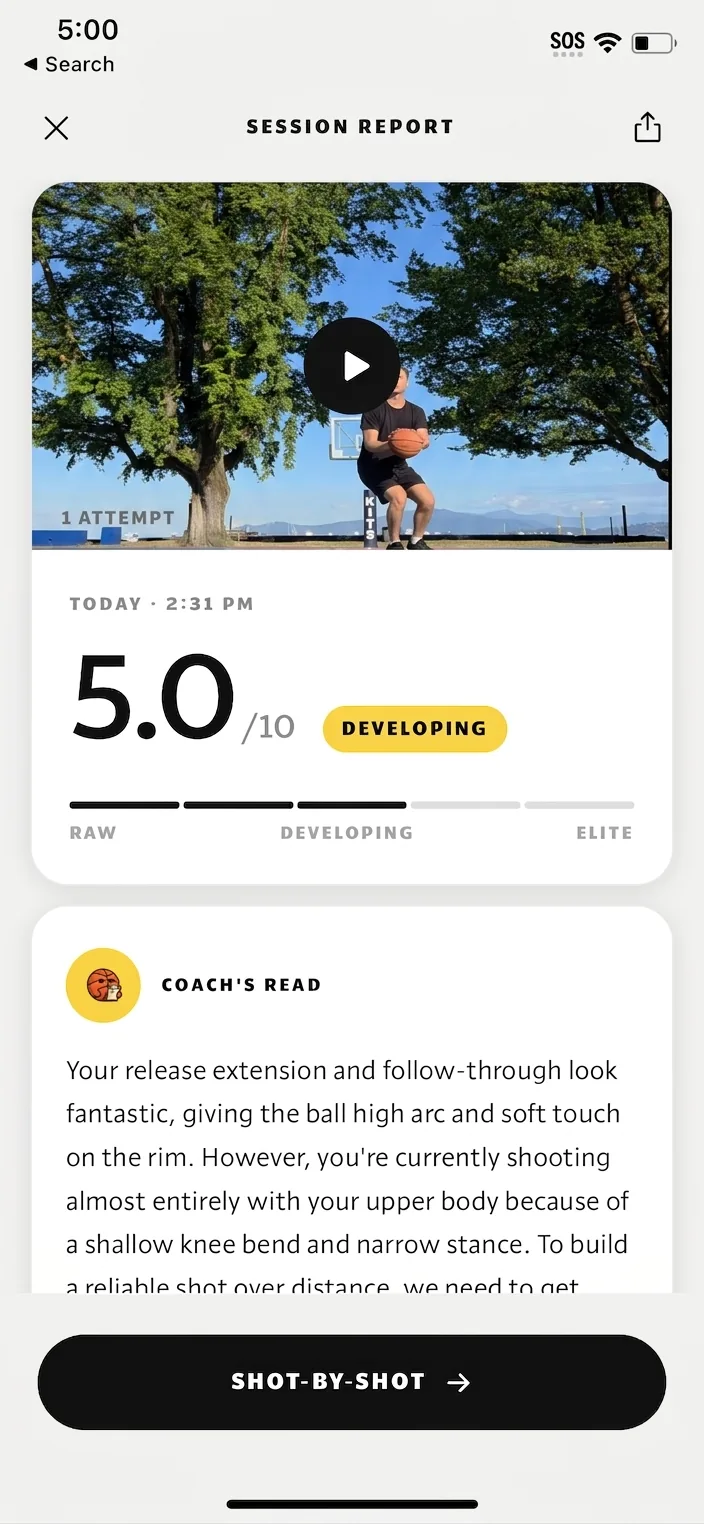
Every rep detected, scored and filed — so the session you shoot tonight is still useful data in three months.
How tracking your form compares to the ways players usually keep score of their own progress.
"I tried a couple of AI basketball training apps already but never really liked the feedback they gave — this one actually provided a detailed analysis that could help someone."
"I've been trying to fix my release for months watching YouTube. 5 minutes with this app and it told me exactly what was wrong — my guide hand was pushing the ball."
Marcus T. · Rec League Player "As a coach, I use this with my players between sessions. They get feedback even when I'm not there. It's like giving them homework that actually helps."
Coach Davis · AAU Coach "My dad can't afford a shooting coach for me. This app gives me the same type of feedback. My percentage went from 32% to 41% in two months."
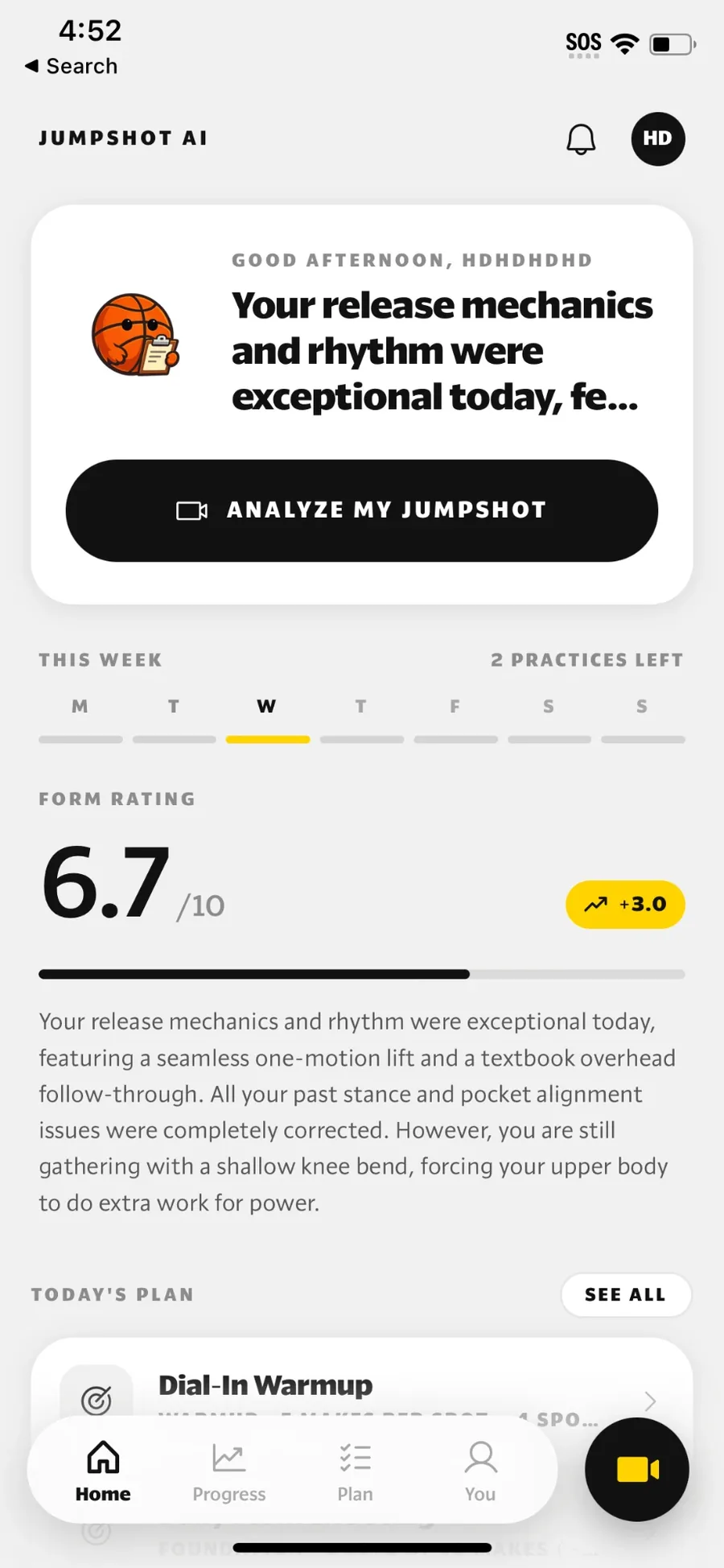
Jordan K. · 8th Grade Player Ratings, rep counts and reviewed mechanics — stored so you can compare tonight against any session you have ever shot.
What gets tracked, how far back the history goes, and how to read the trend.
An AI basketball shot tracker records your shooting sessions and logs more than makes and misses — it scores the mechanics of every rep so you can see how your form itself changes over time.
The tracker is built around form quality rather than outcomes, because form is the thing you can train directly. It counts the shots it analyzes in each session and scores them, which is what makes the long-term trend meaningful.
You can chart your rating over 90 days, six months, a year, or your entire history, so you can compare where your shot is now against any point since you started.
Look for direction over weeks, not day-to-day movement. Single sessions swing with fatigue, surface and how you slept; a fortnight of readings in the same direction is a real change.
That is usually useful rather than bad. A dip often means you are mid-way through changing a habit, or that you shot while tired — both worth knowing. A sustained decline means the current drill is not working.
Yes, Jumpshot AI is free to download on iOS and Android, with a Pro upgrade for unlimited analysis sessions and more detailed biomechanical feedback.
Most shot tracking answers the wrong question. Counting makes and misses tells you how you shot on a given day, which you already knew, and it is an extremely noisy signal: rim height, ball pressure, wind, legs, whether you shot after a workout or before one. Players read a good day as progress and a bad day as regression, and neither conclusion survives contact with the next session. Outcome data at this volume simply is not stable enough to train from.
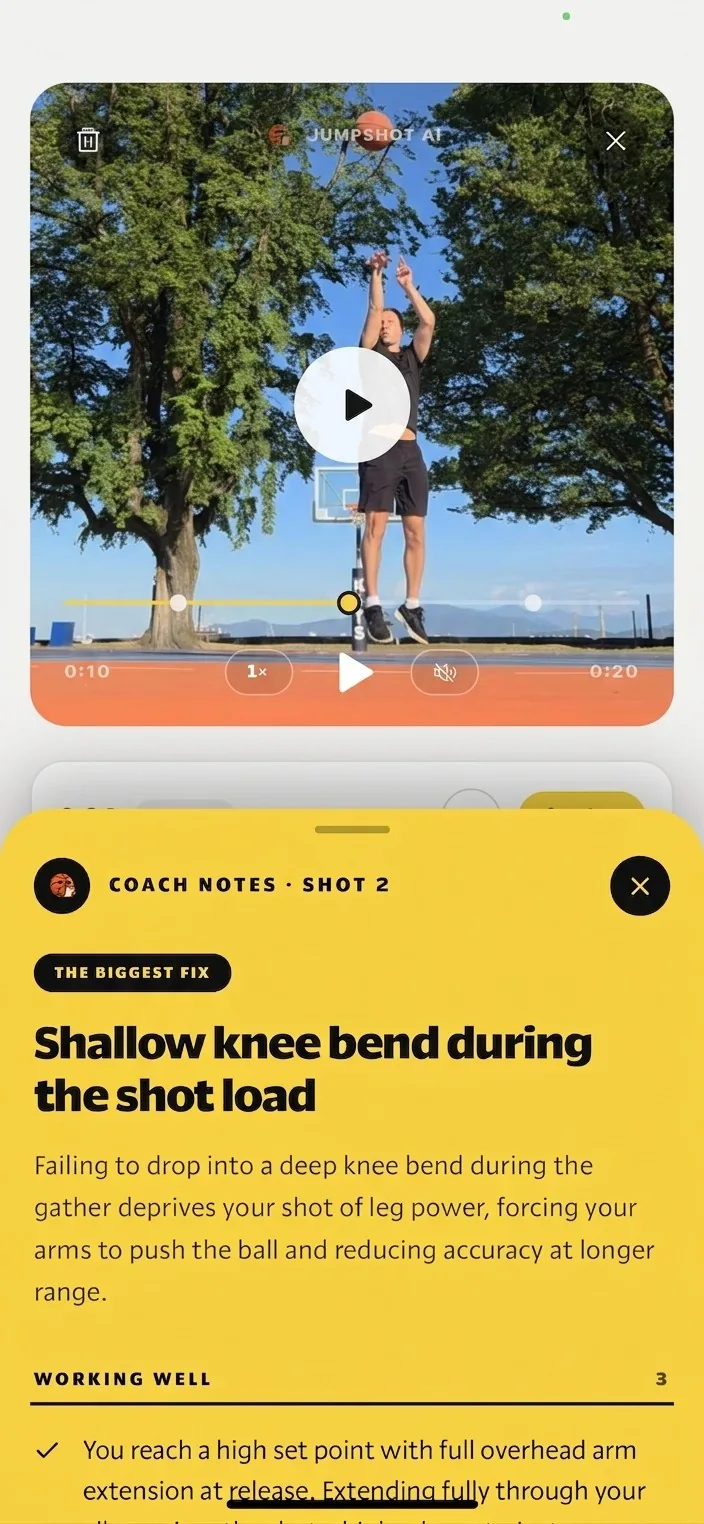
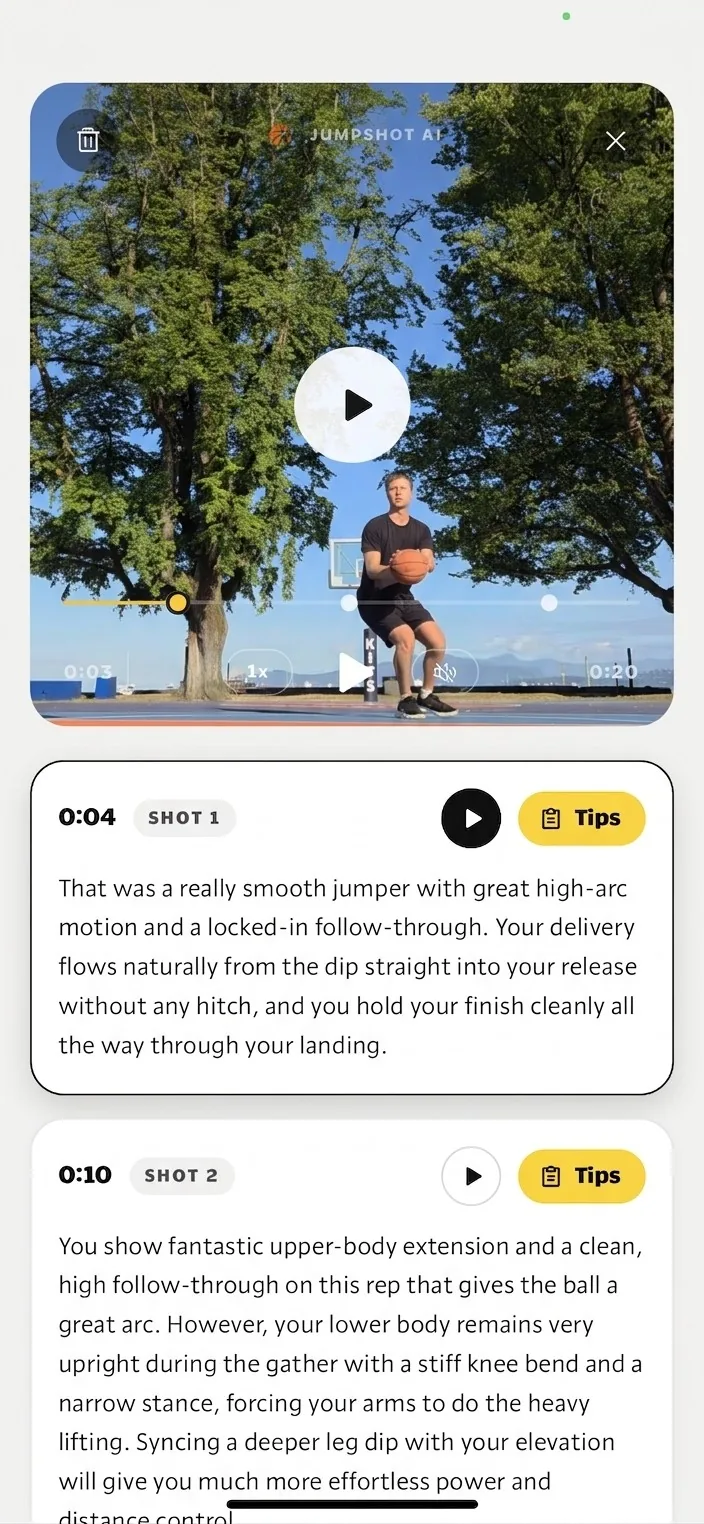
Tracking form is a different proposition, because mechanics change slowly and deliberately. This is where a shot analyzer earns its place over a stat sheet. When an AI basketball shot tracker scores your base, your power generation, your elbow position, your release point and your follow-through on every rep, it is measuring the thing you are actually trying to change. A form rating moves when your habits move, not when the ball happens to fall — which makes a run of readings genuinely interpretable rather than just encouraging or discouraging.
The value shows up over months rather than days. Jumpshot AI stores every analyzed session and charts your rating across 90 days, six months, a year or your entire history, so questions that were previously unanswerable become obvious. Did the release work you did over the winter hold? Does your form deteriorate in the back half of long sessions? Is the shot you have now measurably better than the one you had last season, or does it just feel better because you are more confident? A tracker that logs mechanics can answer all three, which is what separates real AI basketball analysis from a shot chart.
It is also how you avoid the most common training mistake, which is abandoning a change too early. Rebuilding a piece of a shot almost always produces a short-term dip as the old pattern gets overwritten, and players who are only watching makes bail out right at that point and revert. Seeing the dip in the context of a longer trend — and then seeing it recover above where it started — is what gives you the confidence to hold a change long enough for it to actually stick, and it is why measurement belongs inside your AI basketball training rather than beside it.
Download Jumpshot AI and log your first scored session tonight.
Free to download • Available on iPhone and Android • Start improving today