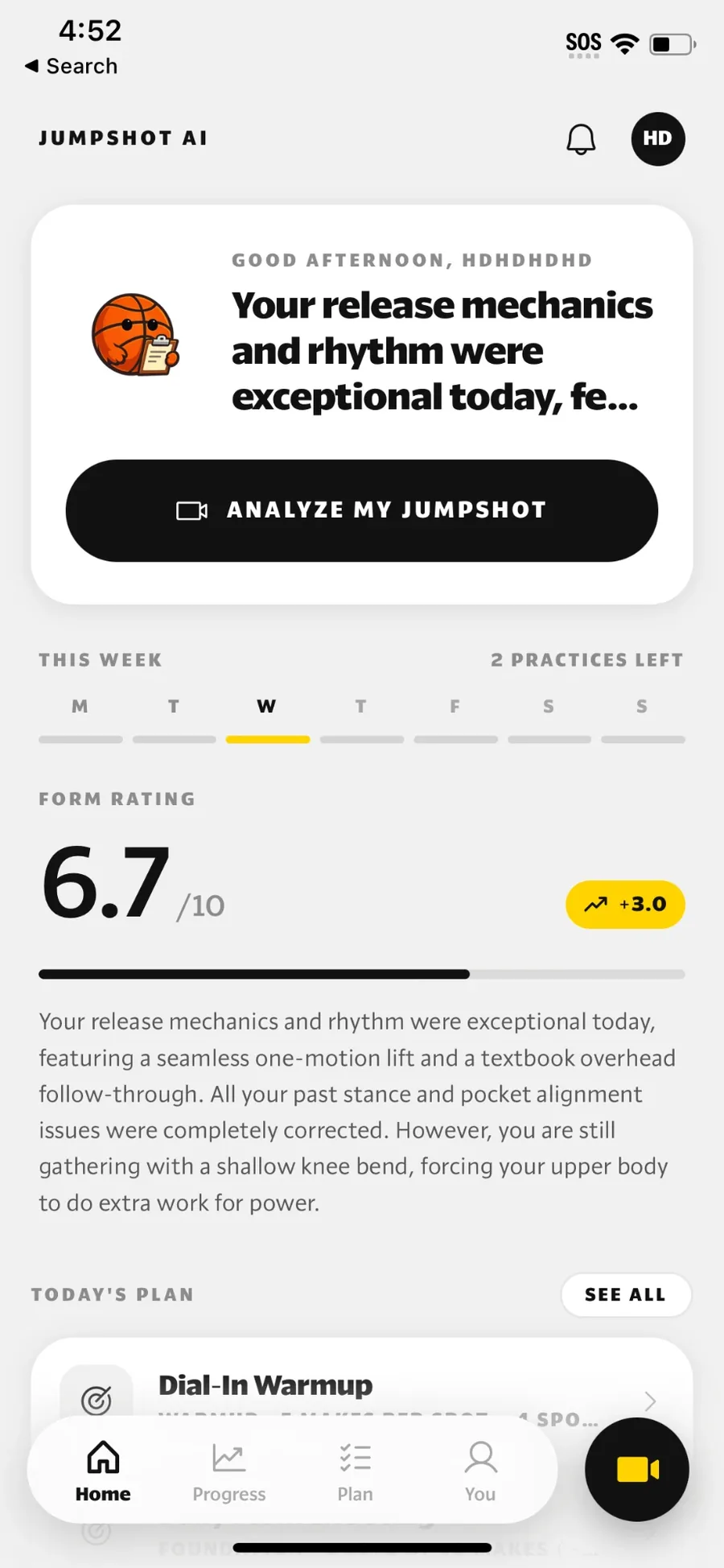


Stop asking the internet whether your shot looks alright. Film one clip, get an honest form rating out of 10, and find out precisely which part of it is dragging the score down.
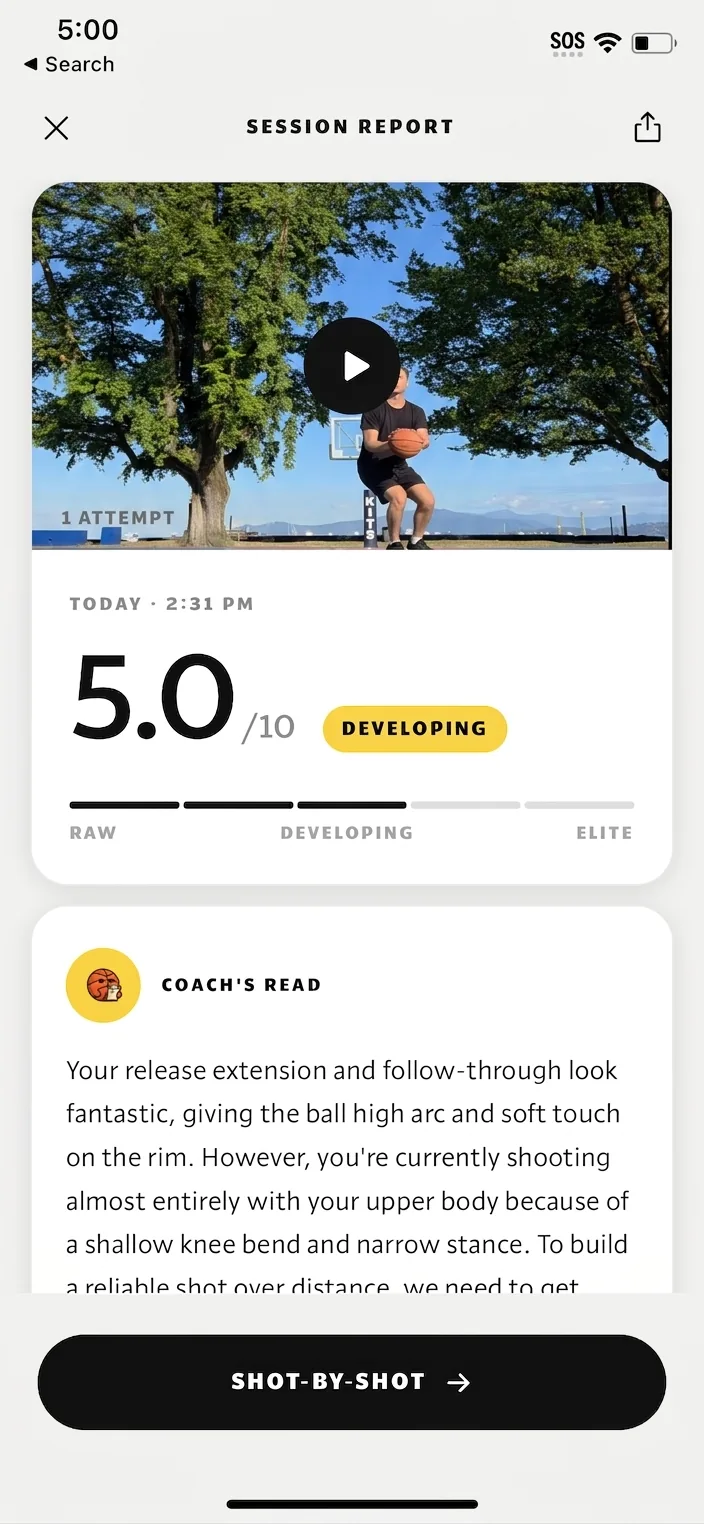
Record, upload, and get a score with the reasoning attached — not a thumbs up from a stranger in the comments.
How an AI rating compares to the other ways players try to find out whether their shot is any good.
"I tried a couple of AI basketball training apps already but never really liked the feedback they gave — this one actually provided a detailed analysis that could help someone."
"I've been trying to fix my release for months watching YouTube. 5 minutes with this app and it told me exactly what was wrong — my guide hand was pushing the ball."
Marcus T. · Rec League Player "As a coach, I use this with my players between sessions. They get feedback even when I'm not there. It's like giving them homework that actually helps."
Coach Davis · AAU Coach "My dad can't afford a shooting coach for me. This app gives me the same type of feedback. My percentage went from 32% to 41% in two months."
Jordan K. · 8th Grade Player The score is not a vibe. It comes from named checkpoints, each scored on every rep in your clip.
What the score means, how honest it is, and what to do with a number you did not want to see.
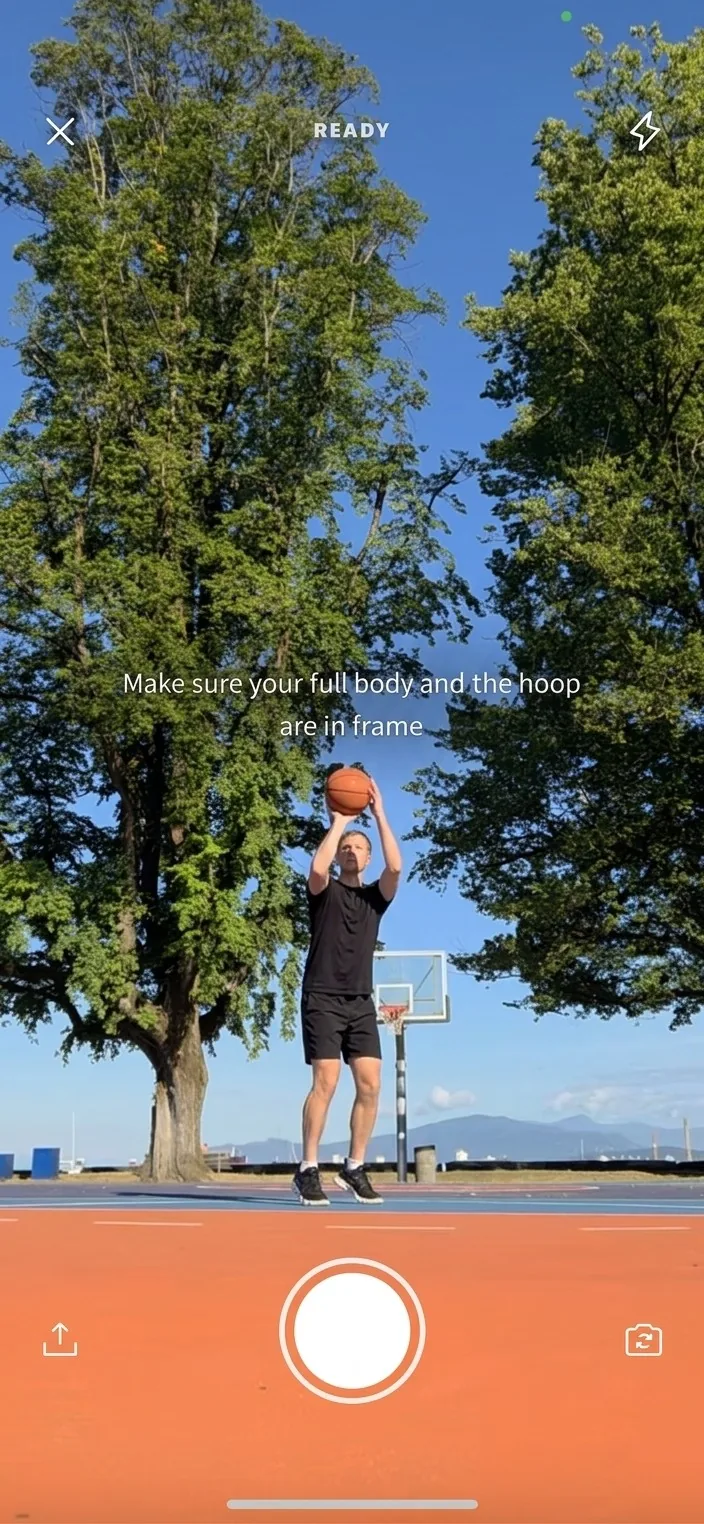
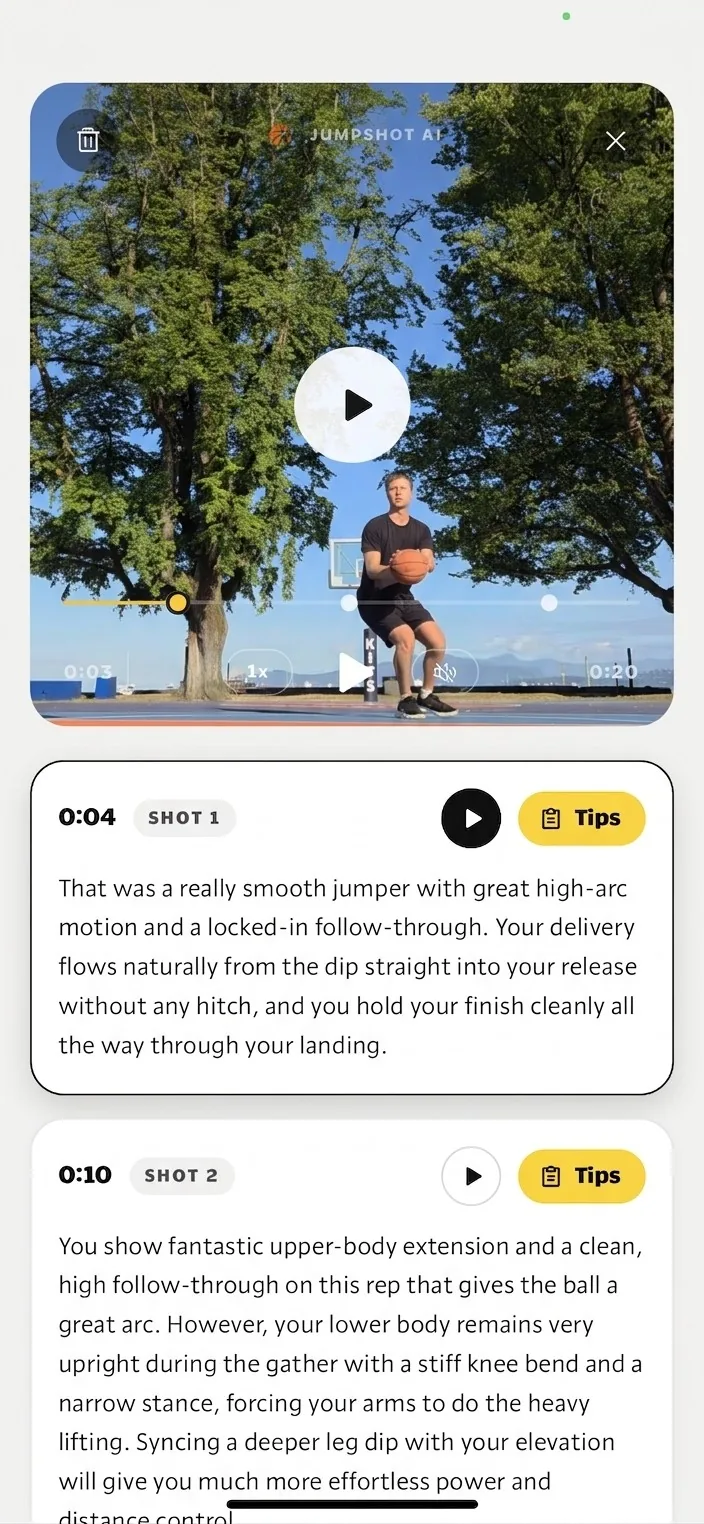
Download Jumpshot AI, prop your phone up where it can see your whole body and the ball, and record about 30 seconds of shooting. The app scores your form out of 10 and explains the score shot by shot.
Most players land somewhere in the middle of the scale on their first attempt, and the number matters far less than the breakdown underneath it. A 6 with one clear, fixable fault is a much better starting point than a 7 with four small ones.
Yes — it scores mechanics against shooting fundamentals rather than telling you what you want to hear. It also scores every rep in the clip, so one lucky rep will not carry the rating.
No. The rating is about form, not results. You can make a shot with mechanics that will not hold up over a season, and you can miss with a release that is fundamentally sound — the rating reflects the mechanics either way.
Mechanical changes usually need a few hundred deliberate reps before they hold under game speed. Players who fix one fault at a time and re-rate weekly tend to see the number move within a few weeks.
Yes, Jumpshot AI is free to download on iOS and Android, with a Pro upgrade for unlimited analysis sessions and more detailed biomechanical feedback.
Every hooper eventually posts a clip somewhere and asks people to rate their jumpshot. It is a reasonable instinct — you cannot see your own shot, and you want an outside opinion. The problem is the opinions you get back. Half the replies are encouragement, half are wrong, and almost none of them can tell you which specific part of the motion is costing you makes, because the person replying watched a six-second clip once at normal speed.
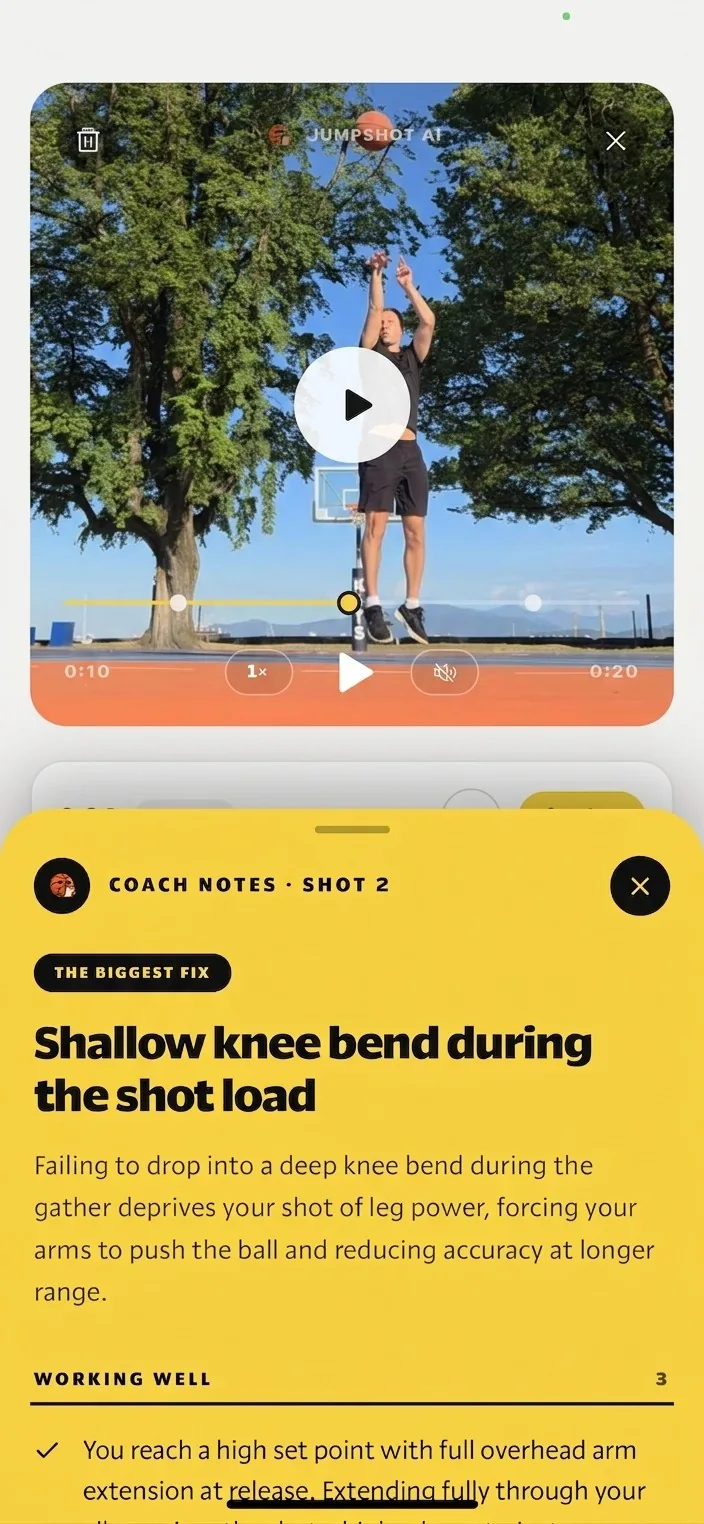
A rating is only useful if the reasoning comes with it. Jumpshot AI scores your form out of 10, but the number is the summary, not the product. Underneath it, every rep in your clip has been checked against the same set of shooting fundamentals: how you load your legs, whether your shooting elbow stays under the ball, where in your jump you release, whether your guide hand is steering the ball, and how long you hold your follow-through. The score is what those checkpoints add up to, and the app shows you the ones dragging it down — the same breakdown any serious basketball shot analyzer should give you.
Scoring every rep instead of your best one is what makes the number honest. Anyone can produce one textbook jumper for the camera; a rating built from a single rep tells you nothing about what happens on your fortieth shot of a workout, which is the rep that resembles a fourth quarter. When the score reflects the whole clip, it captures your consistency, and consistency is what actually separates shooters. Logging it session after session with an AI basketball shot tracker is how you watch it move.
The point of getting rated is not the number, though — it is having a baseline you can move. Once you know your starting score and the one fault behind it, you have something specific to train, and re-rating a few weeks later tells you whether the work transferred. That loop, repeated, is how a shot changes, and it is the core of what an AI basketball coach does for you. It is considerably more useful than a comment section, and it takes about a minute to get.
Download Jumpshot AI, film one clip, and see your form scored out of 10.
Free to download • Available on iPhone and Android • Start improving today